
Very few people in the world like spiders. This is real. It is very common for these insects to sneak into our homes, enter our rooms and stay there for a while, feeding on other insects and even, in some cases, on our own blood. Some species can become dangerous, although it is true that they usually live in very specific and inhospitable territories. For the most part, they do not usually represent more than a relative nuisance or an unwanted guest for the human being.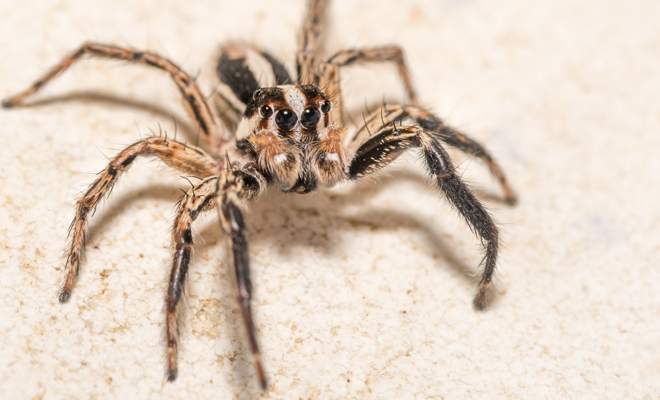
However, some people experience excruciating and exaggerated panic every time they see one of these beings nearby. Worst of all, extreme fear is triggered not only by seeing these bugs, but also by imagining them.
If you have entered this article because you are afraid of spiders, we regret to inform you that you probably suffer from arachnophobia. Below we explain what this type of fear consists of, what its causes and symptoms are, and how it can be treated.
Arachnophobia: a very common fear
- Arachnophobia is the extreme fear or repulsion towards the general set of arachnids, especially spiders. This type of disorder is classified within the specific phobias generated by animals and is capable of causing a remarkable level of discomfort to the person who suffers from it.
- Among the specific phobias, arachnophobia is one of the most common among the population and normally tends to affect women in much more proportion than men. This phobia consists of an acute and disproportionate panic with respect to the level of real threat posed by the feared stimulus in question, that is, spiders. This extreme fear is totally irrational and generates high levels of anxiety for those who suffer from it, and can even cause serious panic attacks.
- Arachnophobic people tend to avoid or run away from spiders and cannot bear the thought of having them around. They also often fear the mere presence of cobwebs.
- The symptoms of fear of spiders include nausea, anxiety, sweating, rapid heartbeat, escape and avoidance behaviors or paralysis, anxiety attacks and crying spells, among many other things. In very extreme cases, even perceptual alterations can occur. This phobia can also manifest itself in advance in those contexts in which the animal in question is very likely to appear.
Why do spiders scare me?
- The causes of fear of spiders have been debated by various professionals for a long time. One of the most accepted theories is related to Seligman’s preparation theory, which states that certain stimuli are linked to specific responses due to the genetic transmission of behavioral tendencies that may be protective for humans. Linking this theory with the specific case of arachnophobia, it can be concluded that the human species would have learned throughout history that arachnids are dangerous and potentially deadly animals, therefore, over time, people have inherited a tendency natural to avoid them.
- Another of the theories is based on the idea that arachnophobia is generated from learning, becoming an acquired response that is developed by a conditioning process. The experience of a negative experience linked to spiders (for example, being bitten or knowing someone who died from the bite of a poisonous species), mainly during childhood, generates an association of arachnids with anxiety and fear. fear. This at the same time leads to avoidance as an escape and defense mechanism, which in turn intensifies that fear.
How to end the fear of spiders? Treatment for arachnophobia
- One of the most effective treatments to combat arachnophobia is usually exposure therapy. In said therapy, the subject in question who suffers from the phobia must gradually expose himself to a hierarchy of stimuli associated with contact with spiders. Usually, treatment begins with exposure to simple stimuli such as photographs or videos. If the person reacts well, later progress is made towards viewing real cobwebs to finally come into contact with the presence of an arachnid at different distances (and may even touch it).
- Usually, the most effective thing is to do this live exposure, although if the patient has a very high level of anxiety, it can also be done in an imaginary way until that extreme fear is reduced and, then, you can move on to the next phase.
- Currently, the use of new technologies gives access to new forms of exposure (both in the case of arachnophobia and other types of phobias). This is the case of virtual reality or augmented reality, which allow a more accepted and safe approach than live exposure since, after all, the image that is displayed can be controlled by the professional and the subject who suffers from it. the phobia knows that it is not facing a real spider.
- Another very effective treatment to reduce the level of anxiety caused by arachnophobia is usually based on relaxation techniques such as breathing or progressive muscle relaxation. Along these lines, in some cases benzodiazepines may also be prescribed to control panic attacks in people who, for whatever reason, must be in frequent contact with these beings (or who are immersed in exposure therapies).
- And you? Do you suffer from arachnophobia or do you know someone who does?